Research
Our lab is interested in the computational mechanisms that guide perception and decision-making - and developing new tools to dissect behavioral and neural data.
Algorithmic motifs in perception
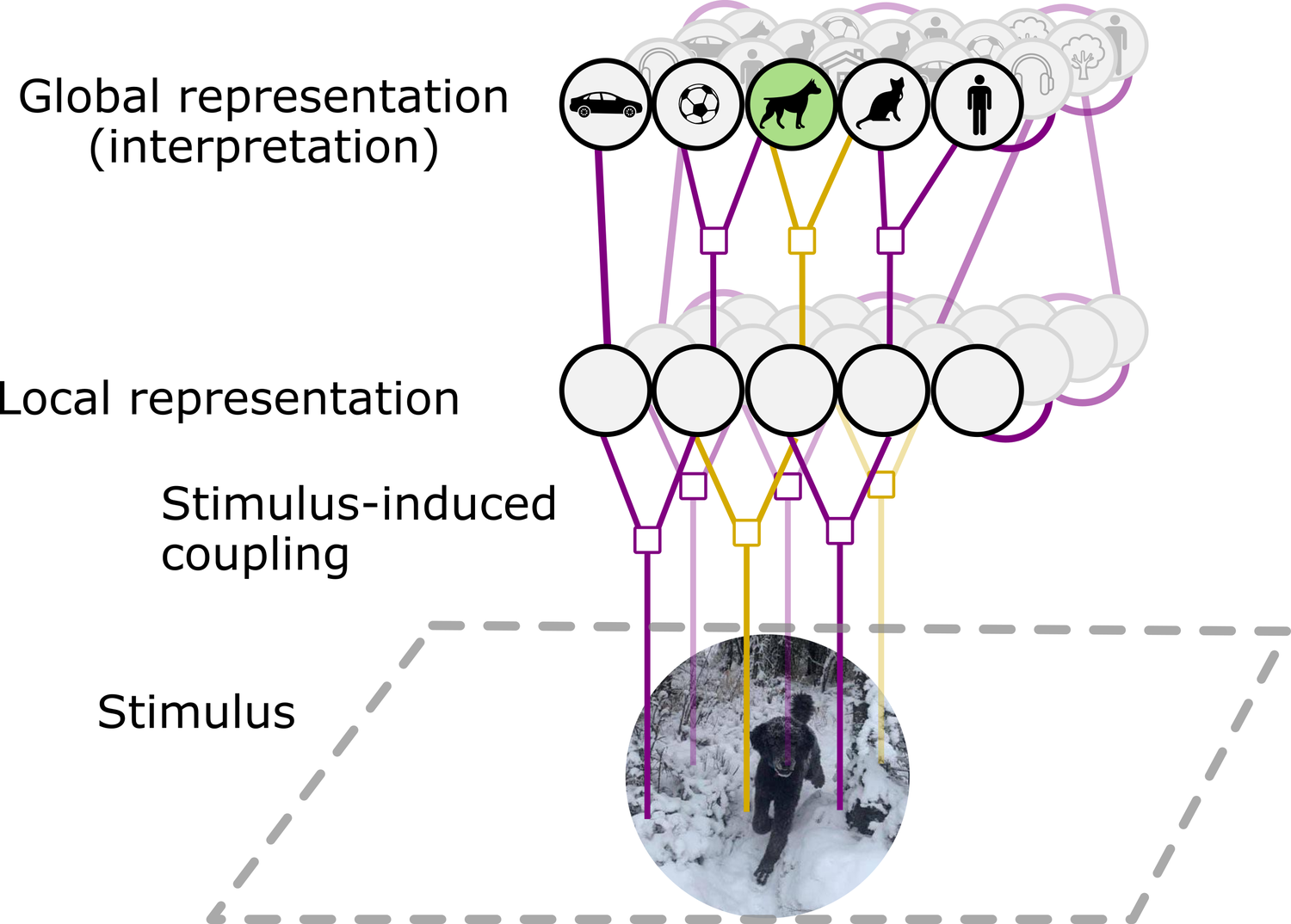
Perception is an inferential process: our brain reconstructs the scene around us from intrinsically ambiguous sensory signals. What are the algorithms that rule this transformation? Are they common across modalities? Do they rely on probabilistic codes? What is the respective role of bottom-up, top-down and lateral connections? How do they differ from artificial architectures (convolutional networks, transformers)? We try to isolate computational principles underlying perceptual inference using a combination of theory and human experiments. This scientific endeavour (led by Alex GD, Howie and Lucía S) has led us to focus on bistable stimuli, where we believe that reverberation in sensory areas driven by Bayesian principles leads to multistability.
Perceptual decision-making
A lot of our behaviour is guided by what we perceive. What are the computational and neural mechanisms that integrate information from our sense and convert them into decisions and motor plans? We study this question combining theoretical tools (modelling of cognitive processes and neural dynamics) and experiments. Experimental data is collected in the lab (human behaviour and EEG) or through collaboration with experimental labs (notably the lab of Jaime de la Rocha at Idibaps and Alex Huk at UCLA). Here as some of the questions we’ve been focussed on lately:
- how do the individual and collective response of sensory neutrons shape spatio-temporal integration in motion perception? (project led by Lucía A)
- how are concurrent sensory signals from different parts of the visual field processed when a visual target may appear at different locations? (project led by Howie)
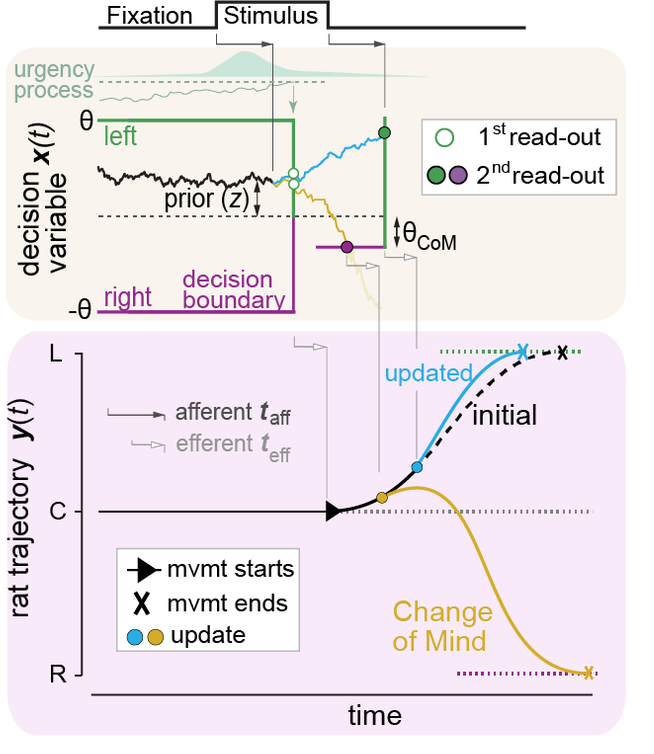
- how do decision-making processes alter motor commands once a response has already been initiated? (publication led by Alex GD and Manuel)
- what are the neural substrate that set up the vigor of responding? (project led by Lluís)
- how does the sense of agency emerge when we observe the results of our actions, and how is this process affected in schizotypy? (project led by María)
Latent modelling of behavior, neural activity - and beyond
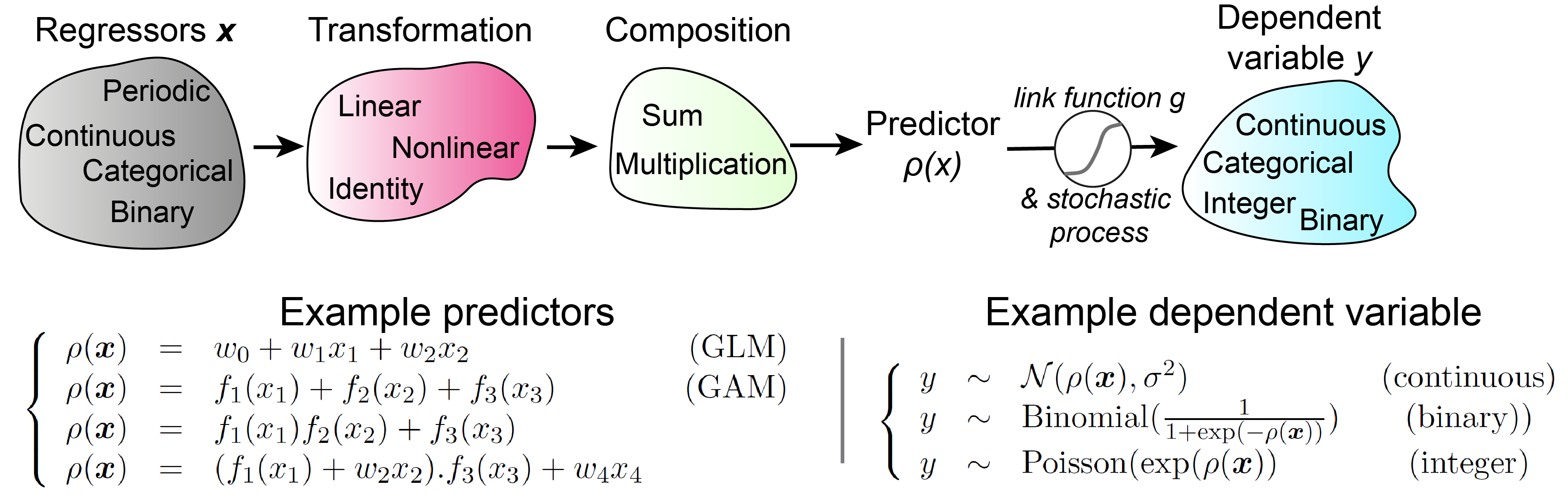
Extracting insightful patterns from complex behavioural or neural datasets requires rich statistical frameworks - handled with care. We work on developing such modelling tools, particularly based on latent probabilistic models (including Gaussian Processes). We have developed a versatile approach for nonlinear regression analysis called GUM (check our Matlab package!) to help neuroscientists dissect their dataset. We have also used such latent modelling to address research questions beyond neuroscience such as cultural evolution.